
Manuel B. Garcia
Educator, technologist, researcher, academic leader
Manuel B. Garcia is a Filipino professor, technologist, researcher, and academic leader whose work lies at the intersection of education and information technology.
He serves as the Senior Director for Educational Technology and Digital Learning at FEU Institute of Technology in Manila, Philippines. In this capacity, he directs the Educational Innovation and Technology Hub (EdITH) as its founding director and the Office of Online Learning and Distance Education (OLDE) as its dean. He is also an Adjunct Professor at the Graduate School of Education of Korea University in Seoul, South Korea.
His career developed around education and information technology, although neither the combination nor the career itself was particularly planned. Garcia entered teacher education without initially realizing that he was training to become a teacher. Years later, he encountered academic research believing that it was a profession largely reserved for scientists. The two discoveries would eventually define much of his professional life.
From computer shops to education
Garcia was born on May 14, 1992, in Valenzuela City, Philippines. Long before technology became the subject of his research, teaching, and academic leadership, it was simply where he spent much of his childhood. In the late 1990s and early 2000s, that meant the neighborhood gaming and computer shops that had become fixtures of everyday life in the Philippines. There were no research questions, educational technologies, or ambitions of an academic career then. There was simply a young boy who wanted to play.
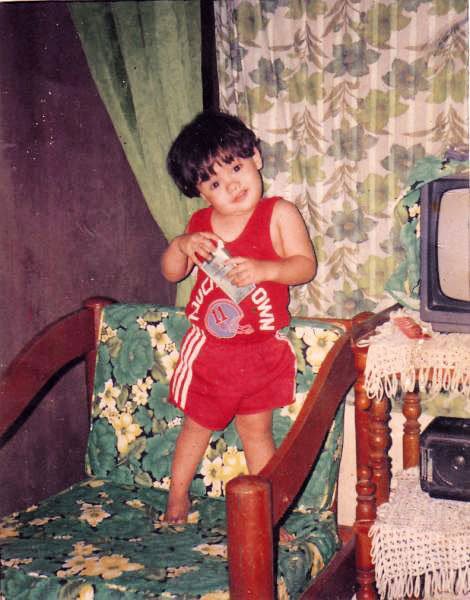
Before computers, there was the PlayStation. Garcia regularly went to neighborhood PlayStation rental shops even when he could not afford to rent a console himself. He would spend hours watching other children play, hoping that someone would arrive alone and need a second player. On those occasions, an invitation to take the other controller meant he could finally play without having to pay for the rental himself.
Crash Team Racing became his favorite game. What began as an opportunity simply to get a turn soon became an opportunity to compete. He played often enough, and became good enough, that beating him became increasingly difficult. His success eventually created a small problem: once the other children knew how difficult he was to beat, invitations to become Player 2 became considerably harder to come by.
The arrival of computer shops opened a much larger world. Garcia began spending increasing amounts of his time in front of rented computers, first learning his way through Half-Life. As with console games, merely knowing how to play was not enough for long. He wanted to understand the game, improve at it, and eventually dominate it. From Half-Life, the progression to Counter-Strike came naturally.
By then, computer shops had become a regular part of his life. He was frequently among the youngest players in Counter-Strike matches and sometimes competed with small wagers attached to the outcome. The competitiveness mattered, but so did the environment itself. Computer shops were places where he could spend hours exploring machines he did not have to own, learning through use, watching what other people could do, and gradually becoming more comfortable with computers.
Much of Garcia's childhood, adolescence, and eventually his college years would be spent in computer shops, renting computers by the hour. Long before he had the language to describe technology as a profession, computers had already become an ordinary part of how he played, learned, competed, and spent his time.
That familiarity followed him into adolescence. Games remained part of the attraction, but computers themselves increasingly became interesting beyond the games running on them. By the time Garcia had to choose a university program, he did not have a carefully formulated career plan. He knew something much simpler: whatever he studied, he wanted it to involve computers.
Information Technology was the obvious choice. The financial realities of private higher education, however, made pursuing the degree at a private institution impractical for his family. Garcia therefore took the entrance examination at the Technological University of the Philippines, a public university, and searched its available programs for something related to computers.
One degree stood out largely because its title contained the word he was looking for: Computer.
The program was the Bachelor of Science in Industrial Education, major in Computer Education. Garcia enrolled without fully appreciating that the word Education in the degree title meant exactly what it said: he was preparing to become a teacher.
It was an accidental entry into a profession he had never imagined for himself. He had gone looking for computers and found education attached to them. The combination would prove consequential. Garcia completed the degree in 2013 and subsequently passed the Licensure Examination for Teachers, becoming a Licensed Professional Teacher.
The computer shops did not immediately disappear from his life when university began. He continued frequenting them throughout his college years, still renting access to the machines that had occupied so much of his childhood. What had begun with waiting for an empty second controller, however, was gradually becoming something else. Computers were no longer merely where he played. They were becoming what he studied, what he taught, and eventually what he would build with.
Education
Garcia pursued information technology more deliberately after his undergraduate education. He completed a master's degree in Information Technology at STI College and later earned the Doctor of Information Technology degree from the University of the East in 2021.
He subsequently returned formally to education by pursuing a Doctor of Philosophy in Education at the University of the Philippines Diliman. Garcia has described the decision as a way of “closing the loop”: education at the undergraduate level, information technology through his master's and first doctorate, and a return to education for the PhD, with his research increasingly connecting both disciplines.
Finding research
Research was another part of Garcia's career that he did not initially anticipate. For much of his early education, he associated the word researcher with scientists working in laboratories. Research seemed to belong to a specialized profession rather than something a teacher, programmer, or university student might pursue as a career.
That perception changed during his doctoral studies. Surrounded by academics conducting studies, presenting findings, and publishing their work, he encountered research not as an inaccessible occupation but as a method for asking and answering questions.
The realization was uncomplicated but important: other people were doing research, and there was no inherent reason he could not do it as well.
His first journal article listed in his curriculum vitae was published in 2017 and examined Filipino college students' adoption of learning management systems. What began with questions surrounding e-learning gradually expanded into programming education, educational games, immersive technologies, human-computer interaction, artificial intelligence, the metaverse, and generative AI.
Although the technologies have changed, an underlying concern has remained relatively stable: what happens when new technologies meet the realities of teaching and learning?
Academic career
Garcia's academic career developed alongside his work in computing. Teaching gave him a setting in which technology adoption, programming education, assessment, digital learning, and student engagement were not merely research topics but problems encountered in practice.
At FEU Institute of Technology, his responsibilities eventually expanded beyond teaching and research into educational technology and academic leadership. He became involved not only in studying digital learning environments but also in designing and building the infrastructure through which such environments could operate.
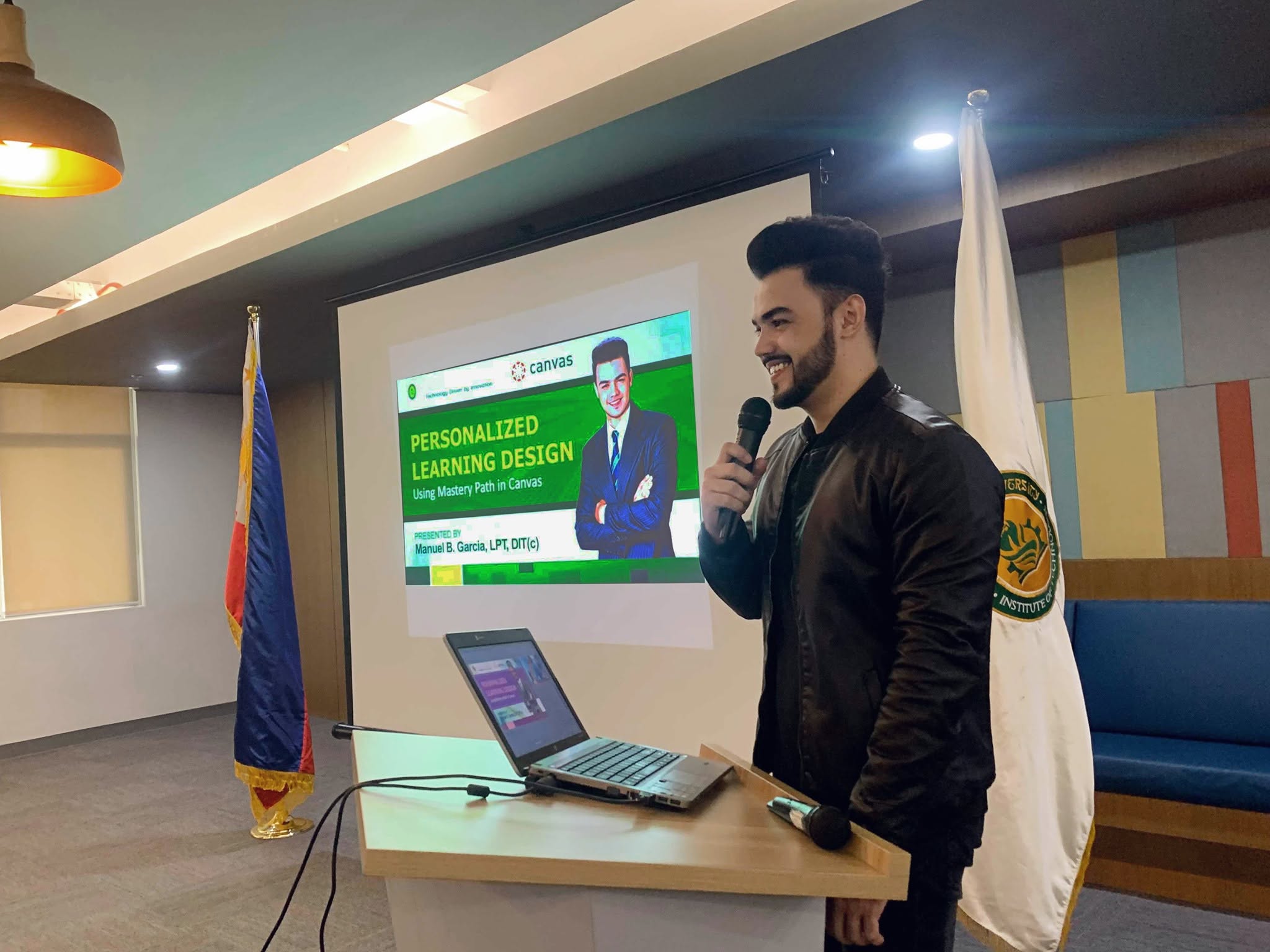
Network Map, EdITH and Paraverse
One of the defining developments in Garcia's professional career began during the COVID-19 pandemic with a software project. In 2020, he led the development of the MILES Network Map for FEU Institute of Technology. The project became more consequential than the application itself.
The rapid shift to digital education exposed needs that could not be addressed through isolated platforms or temporary pandemic solutions. Garcia and the institution's management recognized a broader need for sustained educational technology development and for an institutional unit capable of connecting pedagogy, technology, and digital learning.
That recognition contributed to the establishment of the Educational Innovation and Technology Hub (EdITH), with Garcia serving as its founding director.
Network Map became, in this sense, more than one software application. It marked the beginning of a broader institutional effort to build educational technologies rather than simply adopt them.
Under EdITH, the work expanded into additional applications and digital learning initiatives. Garcia remained unusually close to the technical side of these projects even as his responsibilities expanded into institutional leadership. Beyond serving as lead developer of Network Map, he personally developed several institutional applications, including M-Flix, Briefcase, Credentials, Arcadia, Leaderboard, Calendar, and Eventually.
These and other initiatives eventually became part of Paraverse, FEU Tech's broader digital ecosystem for learning, academic services, communication, and virtual campus experiences. The progression from Network Map to EdITH and Paraverse illustrates a recurring feature of Garcia's career: research and implementation are rarely treated as separate activities. A practical problem may become software, the software may reveal a research question, and the resulting evidence may influence what is built next.
Research and scholarship
Garcia's scholarship draws primarily from education, information technology, educational technology, and human-computer interaction. Rather than remaining within a single technological domain, his work follows problems across disciplines, particularly where technological systems interact with learners, teachers, institutions, and educational practice.
His scholarly record currently includes 159 published scholarly outputs, comprising 52 journal articles, 58 conference papers, 31 book chapters, 9 books, 5 letters to the editor, and 4 front matters. His more recent scholarship has increasingly examined generative artificial intelligence and its implications for teaching, programming, academic writing, creativity, and human interaction with intelligent systems.
The complete and continuously updated publication record is maintained on his publications page and curriculum vitae.
Selected works
Rather than reproducing the full bibliography, this section highlights works representing different stages of Garcia's research trajectory.
Garcia, M. B. (2026). PETMALU-AI: A Reporting Checklist for Transparent and Accountable Generative AI-Assisted Research Writing. Education Sciences, 16, 1127. https://doi.org/10.3390/educsci16071127
Crompton, H., Burke, D., Nickel, C., Bozkurt, A., Miao, F., Sharples, M., Greene, J. A., Parsons, D., Gill-Simmen, L., Edmett, A., de Waard, I., Bonk, C. J., Garcia, M. B., Curry, J., Lindsey, L., Yang, M., Marshall, S., Bali, M., Deutsch, N., … Yu, S. (2026). Governing Generative AI in Higher Education: A Global Delphi Study on Policy and Practice. International Journal of Educational Technology in Higher Education, 23, 1-23. https://doi.org/10.1186/s41239-026-00602-z
Garcia, M. B. (2026). Multilingual Language Learning in a Multimodal Metaverse: A Multidimensional Study of Communicative, Affective, and Cognitive Development. Innovation In Language Learning and Teaching, 1-27. https://doi.org/10.1080/17501229.2026.2621262
Garcia, M. B. (2025). Metaverse Experience and Technology Acceptance (META): A Framework for Decoding Digital Existence in Virtual Worlds. Education and Information Technologies, 31(6), 1581-1610. https://doi.org/10.1007/s10639-025-13860-7
Garcia, M. B. (2025). Teaching and Learning Computer Programming Using ChatGPT: A Rapid Review of Literature Amid the Rise of Generative AI Technologies. Education and Information Technologies, 30, 16721–16745. https://doi.org/10.1007/s10639-025-13452-5
Awards and recognition
Garcia has received recognition for both research and educational technology work. Among these, the Ramon Dimacali Award for Information Technology, conferred by the Philippine Association for the Advancement of Science and Technology in 2024, holds particular personal significance. He was the first recipient of the award.
The award was not one Garcia expected to receive. Coming from outside the universities that have traditionally dominated many national academic competitions and distinctions, he regarded his selection as an especially meaningful vote of confidence in the kind of scholar and technologist he was becoming. Its significance for him has extended beyond the distinction itself to the responsibility of becoming worthy of the values and legacy represented by the late Ramon Dimacali.

Garcia has also been recognized in Elsevier's World's Top 2% Scientists rankings and has received other international, national, professional, and institutional distinctions documented in his curriculum vitae.
Beyond the CV
The competitiveness that characterized Garcia's early years in computer shops did not entirely disappear as his interests moved elsewhere. He remains attracted to difficult problems and tends to work quickly, often moving among research, programming, teaching, and academic administration within the same period.
He describes himself as someone whose mind rarely stops generating ideas. Coding, research, teaching, and academic leadership consequently function less as separate professional identities than as different expressions of the same inclination to understand problems and build responses to them.
Despite the public-facing nature of academic leadership, Garcia is personally more private. He generally prefers spending his limited time outside work at home with his family to maintaining an active social life.
Current work and outlook
Garcia's longer-term interests continue to converge around the same two disciplines that entered his life through very different routes: education and technology.
He regards scholarly publication as important, but not as the final destination of research. Increasingly, he is interested in work that can move beyond the paper itself: research that informs a technology that is actually built, improves educational practice, helps institutions make better decisions, or contributes evidence to educational policy.
This orientation reflects the unusual route by which he arrived in academia. Garcia did not grow up expecting to become a teacher, did not initially know that research could become his profession, and did not begin his career with a carefully designed plan to become an educational technologist.
What connected these developments was a recurring willingness to enter unfamiliar territory, learn quickly, and build something from it.
The child who went to computer shops because he wanted to play eventually became a programmer. The student who selected Computer Education because the degree contained the word computer became a licensed teacher. The doctoral student who once thought research belonged only to scientists became a researcher himself.
Those accidents have since become a coherent academic life.
Timeline
Completed undergraduate degree at the Technological University of the Philippines.
Passed the Licensure Examination for Teachers.
Completed graduate studies at STI College.
Published research on Filipino students' adoption of learning management systems.
Began development of the system that preceded broader educational technology initiatives.
Completed doctoral degree at the University of the East.
Appointed founding director of the Educational Innovation and Technology Hub.
Educational technology initiatives expanded into a broader institutional digital ecosystem.
Received the national recognition from the Philippine Association for the Advancement of Science and Technology.
Senior Director at FEU Tech, founding director of EdITH, dean of OLDE, Adjunct Professor at Korea University, and PhD in Education student at UP Diliman.
External profiles
For a complete record of Garcia's publications, appointments, professional service, certifications, software projects, and awards, see his curriculum vitae.
Curriculum Vitae · Google Scholar · ORCID · Scopus · LinkedIn
Manuel B. Garcia
Educational technologist and researcher

| Born | Manuel Bautista Garcia May 14, 1992 Valenzuela City, Philippines |
| Nationality | Filipino |
| Fields | Educational technology Information technology Education |
| Occupations | Academic administrator Researcher Professor Software developer |
| Institutions | FEU Institute of Technology Korea University |
| Education | Technological University of the Philippines STI College University of the East University of the Philippines Diliman |
| Credentials | Doctor of Information Technology Licensed Professional Teacher |
| Research | Educational technology, generative AI, computing education, human-computer interaction, immersive technologies |
| Known for | Founding EdITH Educational technology development Paraverse |